The Story
According to WKMG News 6 (ClickOrlando), Cocoa Beach asked residents and businesses on November 2 to limit showers, toilet flushing, laundry and dishwashing until Tuesday after more than five inches of rain fell in less than 24 hours. The city's utilities director said the treatment plant was above capacity, the collection system was surcharged and lift stations were straining, and the city warned that sewage could end up in streets if use was not reduced.
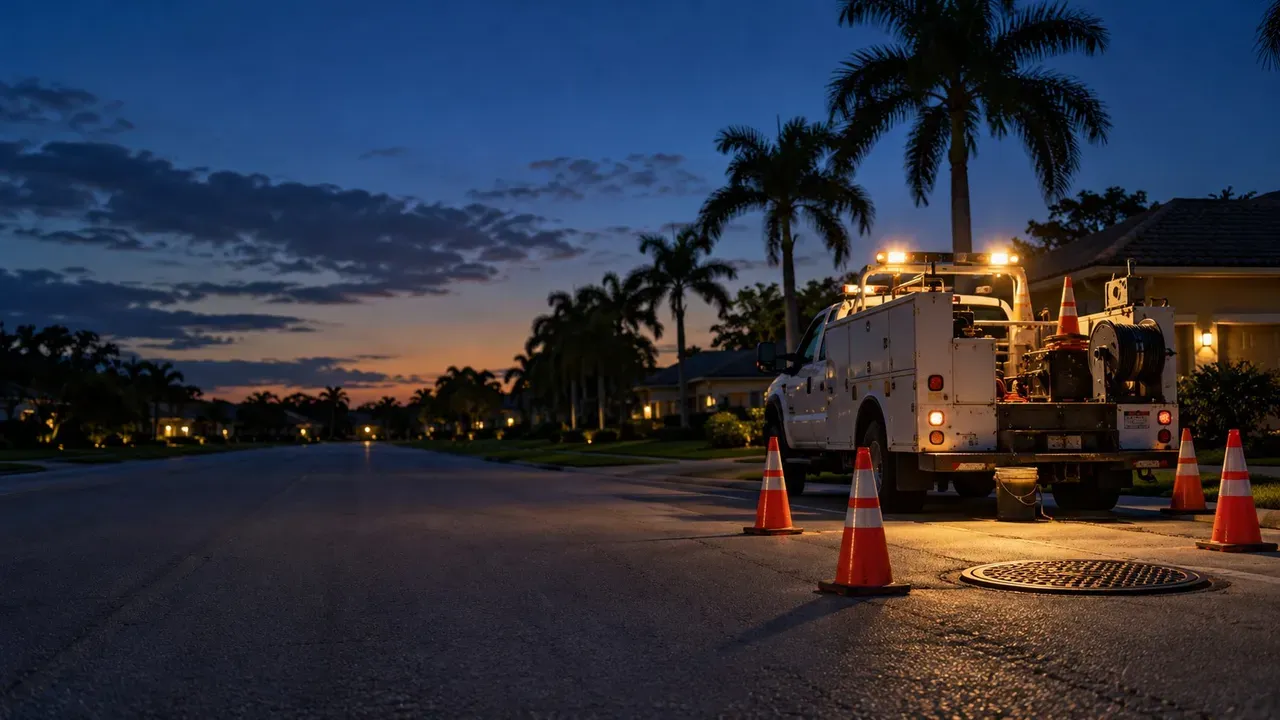
City officials blamed flooded facilities and water getting into older sewer lines, many built in the 1960s, especially when rain is heavy and the river is high, WKMG reported. Crews were working around the clock, including using trucks to pump water out of flooded manholes. No overflow volume was reported.
Up the coast, WFTV reported that Titusville began releasing treated and disinfected wastewater into the Indian River Lagoon near its Osprey Water Reclamation Facility the same morning after flows reached full capacity, and that the city is notifying FDEP.
Source: WKMG News 6 (ClickOrlando), Cocoa Beach asks customers to limit water usage as heavy rain overwhelms wastewater system, November 2, 2026
Source: WFTV, Heavy rain forces Titusville to release treated water into Indian River Lagoon
The infraTerra Take
Cocoa Beach said out loud what most Florida utilities only put in engineering reports: the problem is water that should never be in the sewer. We recommend every coastal utility treat this storm as a free flow monitoring event. If plant influent jumped with the rain and the river, the system is telling you where to look.
On a barrier island, infiltration is not only a storm problem. When groundwater and the adjacent river run high, aging pipe and leaking joints take water in around the clock, and a heavy rain removes whatever margin is left. That is how a plant goes over capacity without a single pipe breaking. Building treatment capacity to carry groundwater is the expensive answer. Finding and sealing the entry points is the cheaper one.
For utilities and agencies, the next step is to line up rainfall and river levels against plant and lift station flows, then aim CCTV and smoke testing at the basins with the sharpest response. For contractors, 1960s coastal collection systems are where mainline lining, manhole rehab and lateral work will be scoped next. For property owners, a request to limit water use is a sign the private side matters too. Cracked laterals and uncapped cleanouts let water in on private property, and that water still ends up at the public plant. See how responsibility splits city by city in our Lateral Ownership Map.
The cheapest gallon to treat is the one that never enters the pipe.
What to Watch
- Whether Cocoa Beach or Titusville files FDEP pollution notices that report overflow or release volumes
- Any Cocoa Beach commission discussion of collection system rehab or I&I funding after the storm
- Water quality test results near Titusville's Osprey facility on the Indian River Lagoon